
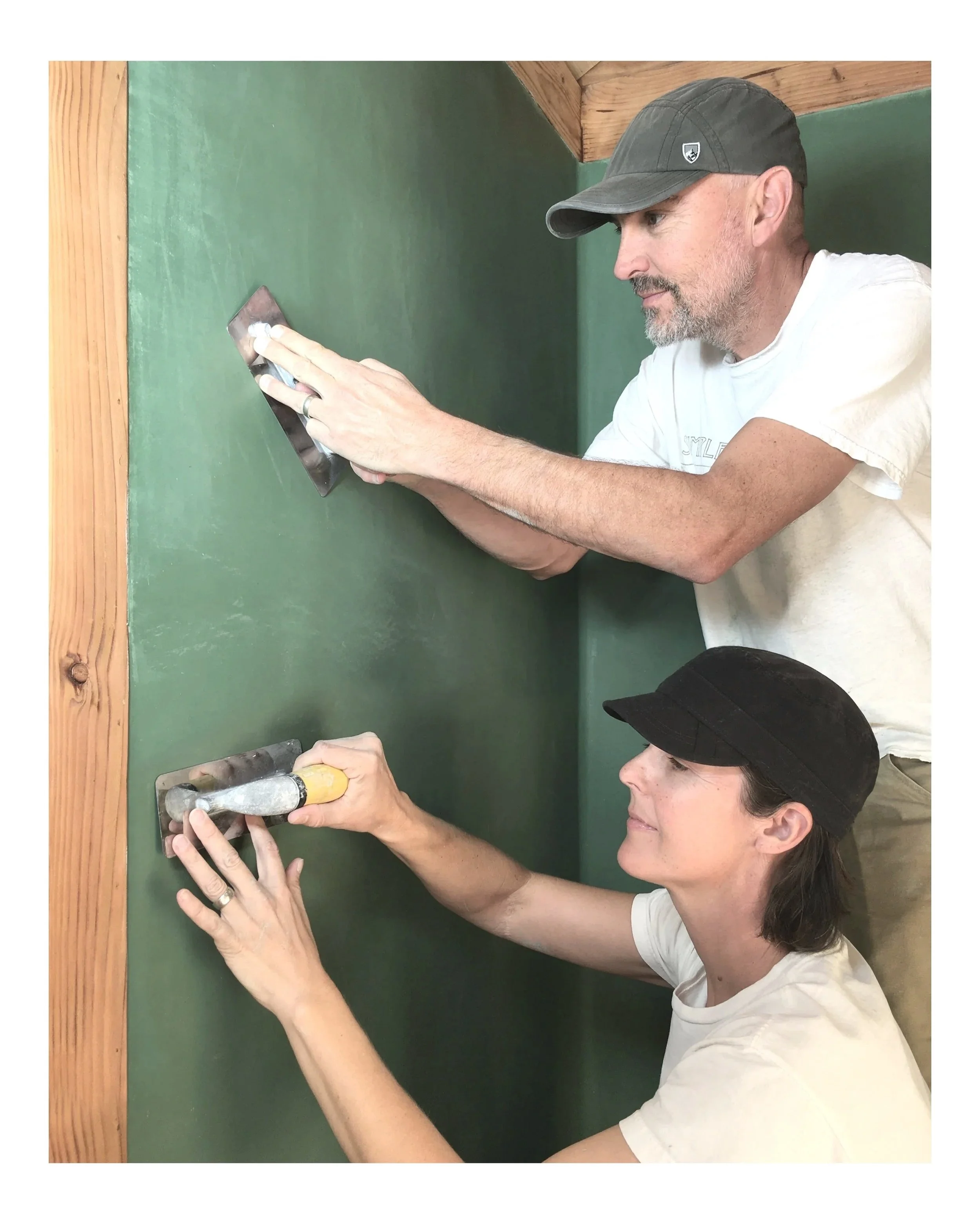
Close quarters plastering a shower
We spend a lot of time explaining what we do (and don’t do) so here’s an overview.
Before the invention of drywall, there was “wetwall”: walls made of wet-applied materials such as lime and gypsum plaster. They were labor-intensive and needed long drying times. As construction became more standardized and faster, wet walls were too difficult and slow to fit into the process.
With the dominance of drywall and other wall boards, plaster became less common and the meaning of the term “plaster” became less clear.
Plaster could refer to the original “wet wall” lath and plaster system that are still found in older homes. This system involves wood strips that create the surface to be plastered and multiple coats of a lime and gypsum based plaster which is usually painted once dry. Although there are some die hards installing lath and plaster systems in new construction, this practice is usually only used for repairing historical homes. (We don’t do this.)
Plaster could refer to stucco. which is usually cement based and applied to the exterior of a building. Most new homes in Southern California are finished on the exterior with stucco because it is fire-resistant and is fast and relatively inexpensive. (We don’t do this.)
Plaster, especially “decorative plasterwork,” could mean the three dimensional elements added to walls and ceilings such as rosets, cornices, and crown molding. This type of plaster is usually gypsum based and is cast in molds then adhered to walls or ceilings. It is more common in large historical homes but retains some popuairity in new construction that is aiming to look Old World. (We don’t do this.)
So what do we do? It falls under a few terms: specialty finishes, veneer plaster, Venetain plaster, architectural finishes, or specialty plaster. These terms all mean some version of an interior, decorative plaster that is applied over an existing wall for aesthetic purposes. We do this.